


 Save
Save Print
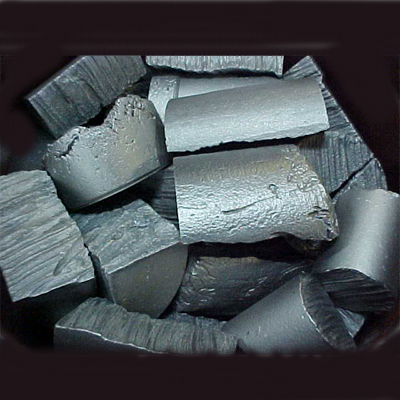
Print[Ferro-Alloys.com]Antimony prices fell last week to $4.30-4.40 per lb compared to $4.40-4.45 per lb. Chinese suppliers held their prices at $9,400 per mt, f.o.b., even though there was almost no buying interest, traders said. Major Chinese smelters have either cut or halted production, but supply still exceeds demand. Chinese antimony production in the first half of 2013 was down approximately 20% to 46,000 mt in Lengshuijiang area of Hunan province, where Hsikwangshan is located, but apparent consumption was only 35,000 mt.
China exported 1,286 mt of antimony metal in the first five months of 2013 vs. 2,467 mt in the same 2012 period. The primary exports in the first five months of 2013 (first five months of 2012 in parentheses) were to: US, 521 mt (521 mt); Europe, 290 mt (241 mt); Hong Kong, 180 mt (405 mt); and Japan, 60 mt (538 mt). In May exports were 283 mt compared to 1,653 mt year-over-year.
The Chinese government has allocated export quotas for the second half of 2013 at 4,752 mt; 40% of the total quota for the year. The top five licensed exporters are: Guangxi China Tin, 2,083 mt; Minmetals, 743 mt; Guangzhou Rixing Metals and Chemicals, 671 mt; Hunan Zhongnan W and Sb, 542 mt; and Guizhou Minmetals I/E, 414 mt.
Despite the steady decrease in spot antimony prices, sales activity has not improved, traders said. “I put out a few RFQs [last week] and there seemed to be a lot of competition,” a buyer remarked. Most sellers agree that prices are likely to fall further in the near-term because of weak summer demand. “The market is still quiet,” added another source. “There is limited interest with ongoing questions surrounding price movement.”
As expected, bismuth prices fell last week to $8.15-8.35 per lb compared to $8.40-8.50 per lb. Bismuth prices started to erode late in the second quarter as demand softened and Chinese suppliers lowered their prices. “Prices held for a little while but, overall, the market has been on a slow down-trend over the past few weeks in a typical summer pattern,” a source noted.
Selenium prices slumped to $27-28 per lb compared to $29-30 per lb on thin trading. With slowed buying from Chinese manganese metal producers, European suppliers have had to lower their prices. US prices also are coming under pressure. “I made offers of $27, $25 and $24.5 per lb [last week] but [I had] no transactions,” stated a source. “Buyers are trying to hold out for softer numbers.”
Indium prices are consolidating at higher levels with sales at $575-600 per kg compared to $545-600 per kg. One seller said it was difficult to find indium under $585. With the Kunming Fanya Exchange attracting large volumes of indium, some Western consumers have become nervous about supply availability and have re-entered the market. “These buyers might be looking to take a position, but they are hesitating because of fears that prices could collapse again,” commented a supplier
While talk of an indium price “bubble” is rampant, there are factors that might prevent a bubble burst, said an observer. First, there is the question of where indium from the Fanya Exchange would be sold. To export from China, an export license is required and there is a 5% export tax. Indium is smuggled out of China illegally on a regular basis, but to smuggle significant quantities would be difficult, sources said.
Currently, there is almost no domestic demand for indium within China because there are no Chinese indium tin oxide (ITO) target production facilities. “China imports ITO target. It doesn’t yet have the technology,” a supplier said.
One analyst noted that despite the artificial soaring prices brought on by speculative activity, indium availability would have started to tighten even without the advent of the Fanya Exchange. China has exported almost no indium during the past 18 months, the analyst said, and more recently China has started importing indium.
China’s absence from the export market has not been felt until now, sources said, because ITO producers have been well stocked. Those stocks, especially in Korea, reportedly have been drawn down. Flat panel display demand is expected to rise 5% in 2013, according to one expert. The market fell in 2011, was slightly up in 2012 and is quite a bit better this year. While most of the display production has shifted to Korea, Japan recently has been regaining market share because of the yen exchange rate.
Copyright © 2013 Ferro-Alloys.Com. All Rights Reserved. Without permission, any unit and individual shall not copy or reprint!
- [Editor:editor]
 Daily News
 Research
 Magazine
 Company Database
 Customized Database
 Conferences
 Advertisement
 Trade
Trade




 Online inquiry
 Contact


Tell Us What You Think